

The DHI Playbook: Lessons from 26 Years of Global Exploration Data
Advancements in seismic acquisition technology are delivering higher-resolution data while minimizing environmental footprint.


Do you have new perspectives, standout case studies, or groundbreaking research that could spark meaningful conversations in the energy industry?
Submit your abstract for consideration

Abstract Summary
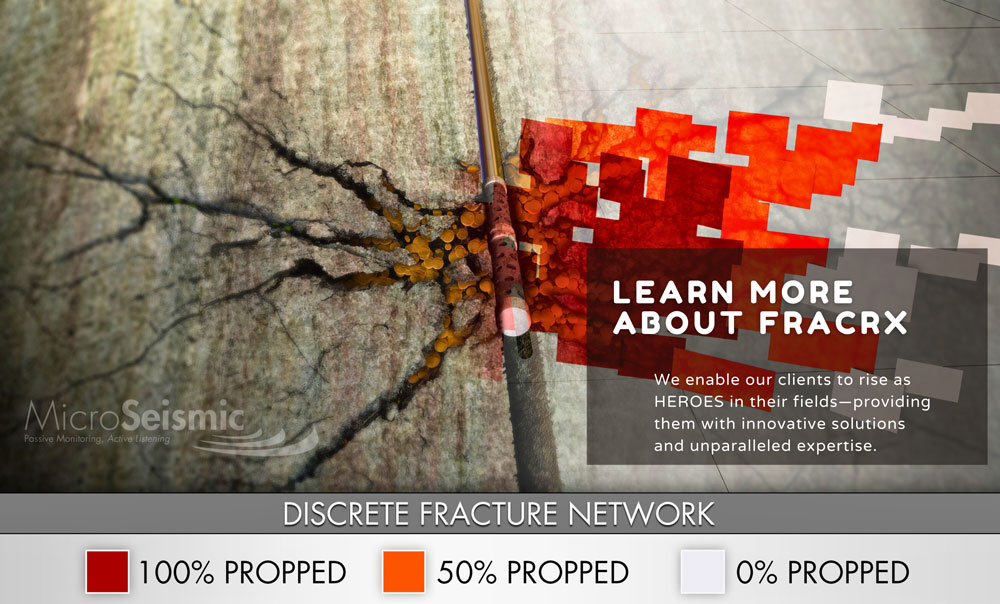
Hydraulic fractures in unconventional reservoirs are often assumed to be vertical, but growing field and laboratory evidence shows that fractures can also propagate horizontally along bedding planes. These horizontal fractures are influenced by both rock properties such as shale anisotropy and stress relaxation and operational factors like well spacing and fluid volumes. Understanding the interaction between geology and stimulation intensity is critical for predicting and managing horizontal fracture formation.
Key Points
Challenging the vertical-only assumption
Field evidence of horizontal fractures
Shale rock properties matter
Horizontal fractures can form even under higher vertical stress
Stress relaxation increases fracture risk
Operational factors amplify the effect
Rock has a stimulation limit
Implications for operations
Egor Dontsov is a Chief Scientist at ResFrac Corporation. Previously, he worked at W. D. Von Gonten Laboratories and was an Assistant Professor at the University of Houston. He holds a B.S. degree in Physics from Novosibirsk State University in Russia and a Ph.D. degree in Civil Engineering from the University of Minnesota. Dr. Dontsov has over ten years of academic and industrial experience in hydraulic fracturing and has co-authored over 60 peer-reviewed journal publications and over 20 conference papers, most of which are related to the numerical modeling of hydraulic fracture growth and proppant transport. Dr. Dontsov is a lifetime ARMA and SPE member and currently serves as the Chair of ARMA’s Technical Committee on Hydraulic Fracturing (TCHF), as well as the member of ARMA’s Board of Directors.

Advancements in seismic acquisition technology are delivering higher-resolution data while minimizing environmental footprint.
Copyright 2026 MicroSeismic Inc.