
Real-Time Completions Intelligence for Vaca Muerta
Stress. Fractures. Hazards. Production.
Improve Vaca Muerta completion decisions with real-time intelligence on stress, fracture geometries, hazards, and other subsurface factors that influence hydrocarbon production and wellbore stability.
- Characterize the stress conditions that influence fracture initiation and propagation.
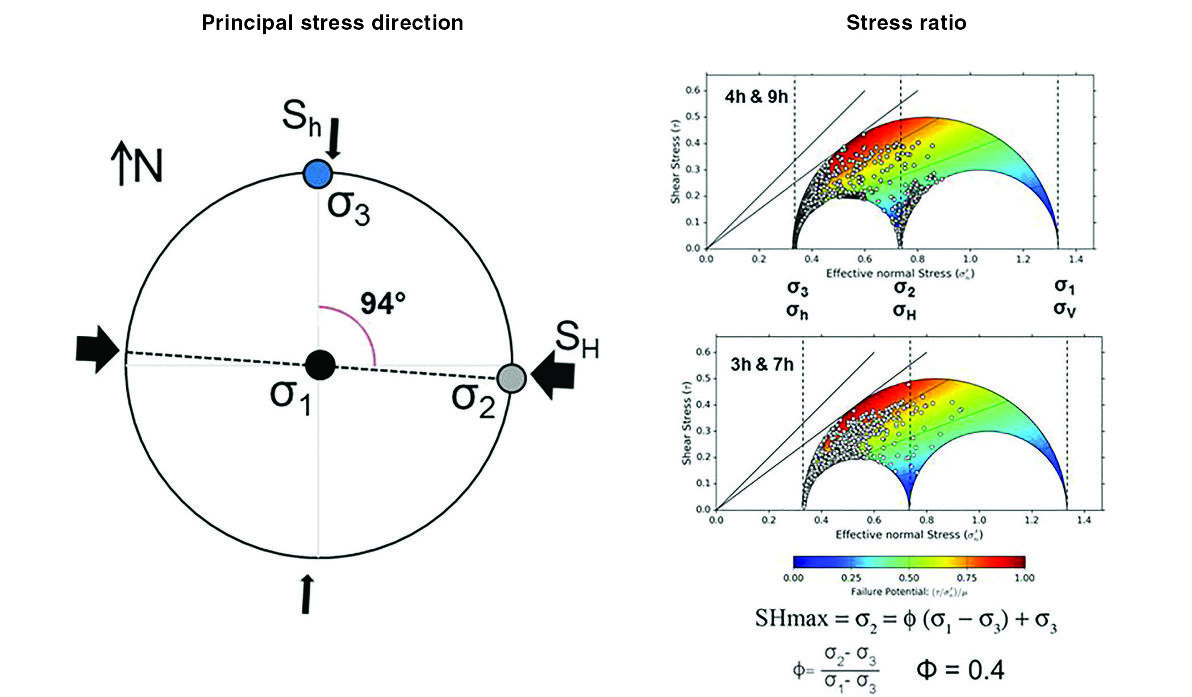
- Focal mechanisms, moment tensors and event patterns can improve understanding of maximum horizontal stress orientation (SHmax), local stress variability and changes in deformation style across the development.
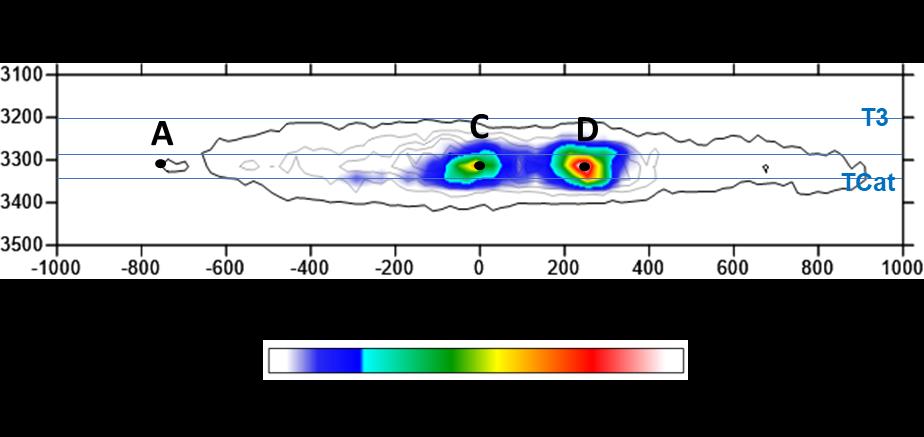
- Map fracture height, half-length, azimuth, microseismic event distribution, and stimulated reservoir volume.
- Verify whether observed fracture growth remained in zone, developed effective contact with the target interval, or extended toward neighboring wells and nonproductive rock.
- Identify seismic responses consistent with fault activation, bedding-plane slip, out-of-zone growth, and fracture-driven interactions.
- Use real-time insights to manage offset-well exposure, guide stage execution, and assess areas of structural concern.
- Support induced seismicity risk management with event monitoring and alerts aligned with operator-defined response protocols.
- Connect observed reservoir response to the completion variables that influence hydrocarbon production.
- Comparing fracture behavior with treatment, pressure and production data can help identify more effective stages, diagnose underperforming intervals and improve future decisions on spacing, sequencing, clusters, fluid and proppant placement.
Vaca Muerta Completion Case Studies
Reduce completion risk and improve production in Vaca Muerta.
Microseismic Monitoring of Vaca Muerta Completions in the Neuquén Basin, Argentina
This Vaca Muerta study uses surface and buried microseismic arrays to characterize fracture geometry, focal mechanisms, SHmax and discrete fracture networks.
Imaging a Two-lateral Zipper Frac With a Surface Microseismic Array in Vaca Muerta, Argentina
This Vaca Muerta case study uses surface microseismic monitoring to measure fracture geometry, SHmax, stimulated reservoir volume and offset-well interaction.
Understanding the Vaca Muerta Formation
This Vaca Muerta presentation uses BuriedArray™ monitoring to characterize fracture geometry, SHmax, natural fractures, proppant distribution, and discrete fracture networks.
Completion and Wellbore Geomechanics in High Stress Settings
This presentation explores how microseismic focal mechanisms can improve understanding of fault reactivation, stress-field interpretation, and wellbore stability in high-stress environments such as Vaca Muerta. (Use presentation mode for voice over)
This Cow Isn’t Dead
Industry expert Bill Von Gonten (W.D. Von Gonten Engineering LLC – WDVGE) discussed how Argentina’s Vaca Muerta geology, stress regime, and reservoir characteristics influence fracture behavior and completion performance, highlighting key lessons for improving hydrocarbon development and resource efficiency.
Vaca Muerta Completions Intelligence
Completion Performance Depends on Reservoir Response
Completion performance in Vaca Muerta depends on how the reservoir responds to stimulation. Stratigraphic variability, natural fractures, faults, changing stress conditions and well-to-well interactions can influence fracture propagation, effective connectivity and production response.
MicroSeismic is a specialist in real-time completions intelligence. We measure and interpret stress, fractures and geologic hazards during hydraulic fracturing so completions engineers can evaluate treatment response, improve fracture effectiveness and apply what they learn to the next stage, well or pad.
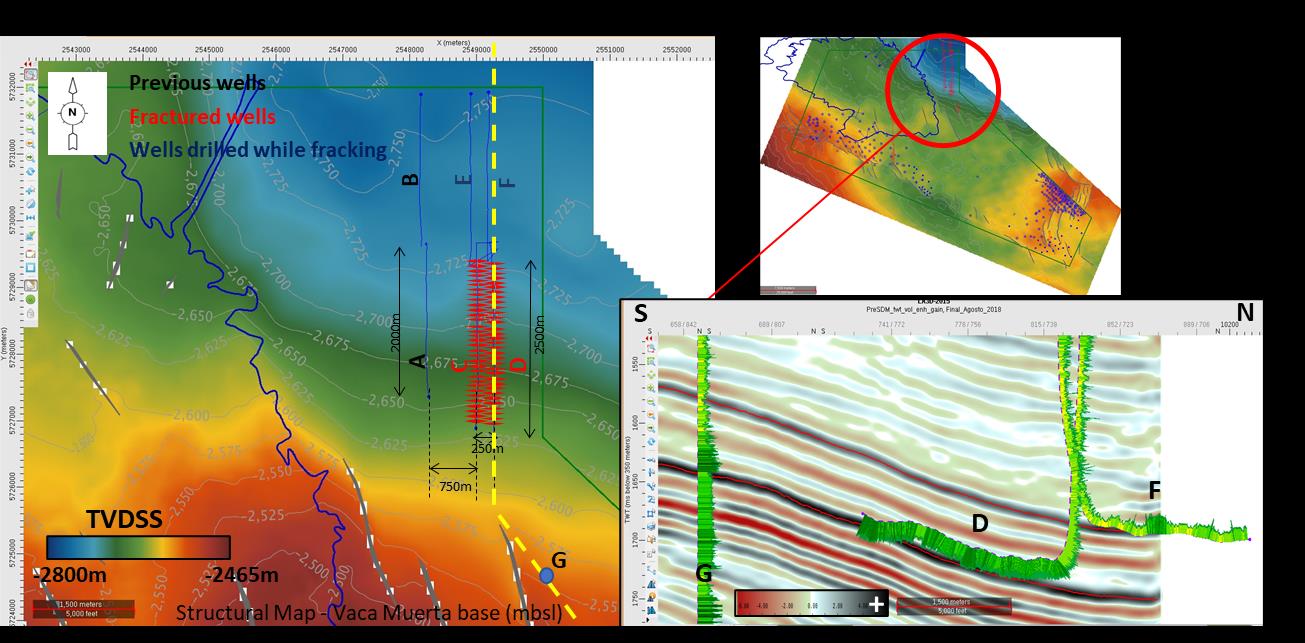
Source: Crovetto et al., URTeC 1503, 2020
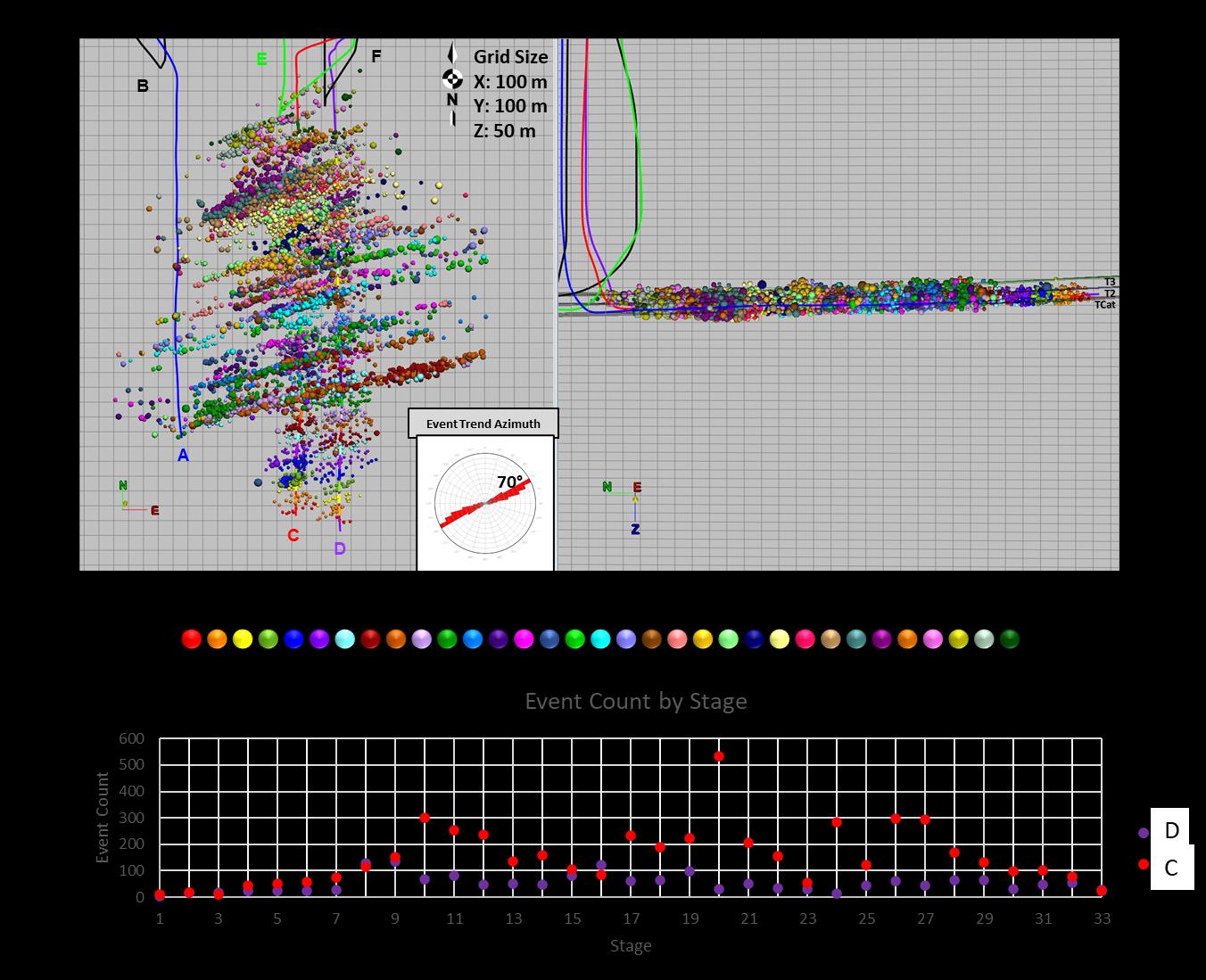
Source: Crovetto et al., URTeC 1503, 2020
Measure the Reservoir Response to the Completion
A treatment can be pumped according to plan while the reservoir responds differently than expected. Stimulation may activate pre-existing fractures or faults, promote bedding-plane slip, drive out-of-zone height growth, create communication with offset wells or leave portions of the target interval less effectively connected.
MicroSeismic converts the seismic response generated during hydraulic fracturing into engineering intelligence. Completions teams gain an independent measurement of reservoir response that can be integrated with pressure, treatment, geology, well-spacing and production data.
From Microseismic Events to Completion Decisions
An event cloud is not the answer. MicroSeismic interprets the spatial, temporal and source-mechanism characteristics of the observed response to address completion questions:
- Did the treatment stimulate the intended interval?
- How far and how high did the observed fracture response extend?
- Did fractures interact with faults, bedding planes or offset wells?
- Which stages behaved differently, and when did that change occur?
- What does the response indicate about SHmax and local stress behavior?
- What should the team test or change on the next well or pad?
- Which observed fracture responses correlate with stronger production performance?
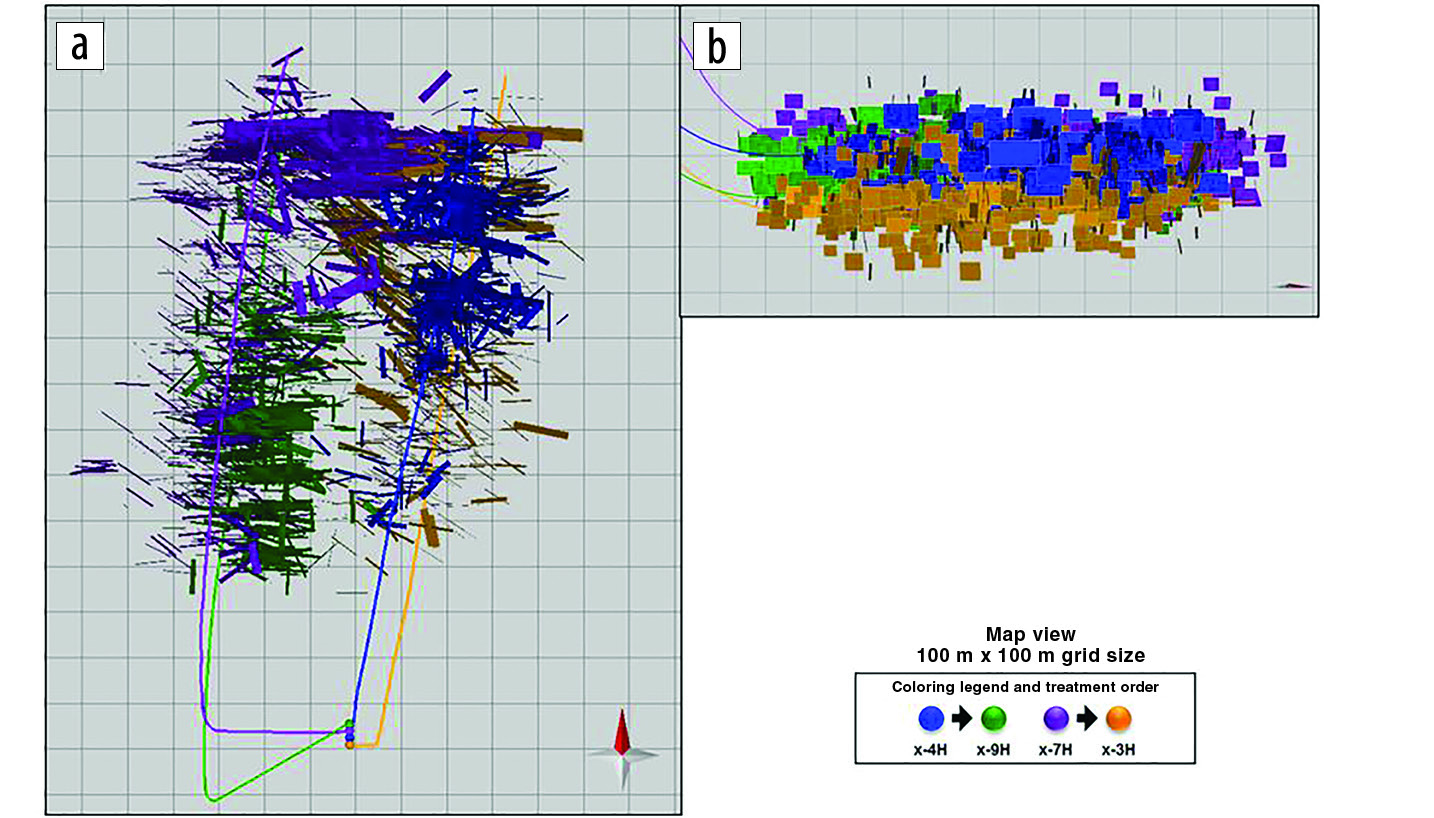
Source: Curia et al., The Leading Edge, 2018
Monitoring Designed Around Real-Time Completion Decisions
Every Vaca Muerta development has different geometry, infrastructure, objectives and constraints. MicroSeismic designs the monitoring program around the decisions the operator needs to make, not around a one-size-fits-all acquisition method.
- Surface-array monitoring for broad coverage across multiwell developments.
- Buried-array monitoring for repeatable, long-term monitoring and improved operational continuity.
- Integrated interpretation using treatment data, geology, well trajectories, pressure observations and operator models.
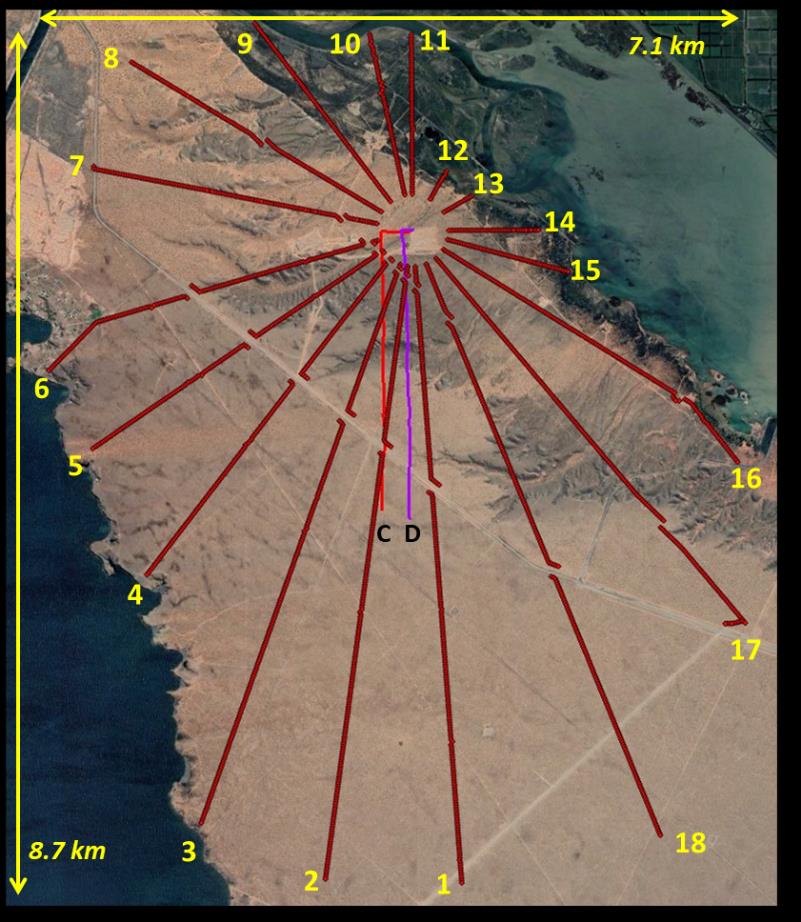
Source: Crovetto et al., URTeC 1503, 2020
Real-Time Intelligence During Operations
MicroSeismic has delivered real-time microseismic monitoring for more than 16 years. During stimulation, our teams can track event development, fracture geometry and proximity to defined areas of concern. Custom alerts and collaborative communication help the operator interpret changing subsurface behavior while the operation is underway.
Real-time intelligence does not replace engineering judgment or guarantee that every operational risk will be avoided. It gives the completions team another high-value measurement for making better-informed decisions.
Source: Curia et al., The Leading Edge, 2018
Increase Productive Reservoir Contact, Not Just Total SRV
MicroSeismic does not promise a production uplift from monitoring alone. The value is better evidence for the engineering decisions that control production performance.
More stimulated rock volume does not automatically mean more hydrocarbon production. Productive performance depends on whether the completion creates effective, durable connectivity within the target reservoir while limiting energy and treatment volume lost to faults, bedding planes, out-of-zone growth or offset-well interaction.
Real-time completions intelligence helps engineers distinguish total observed deformation from the fracture response most likely to contribute to productive reservoir contact. When integrated with pressure diagnostics and production results, those measurements can support completion designs intended to increase hydrocarbon recovery and capital efficiency.
Source: Crovetto et al., URTeC 1503, 2020
Vaca Muerta Example: When the Observed Response Changed the Interpretation
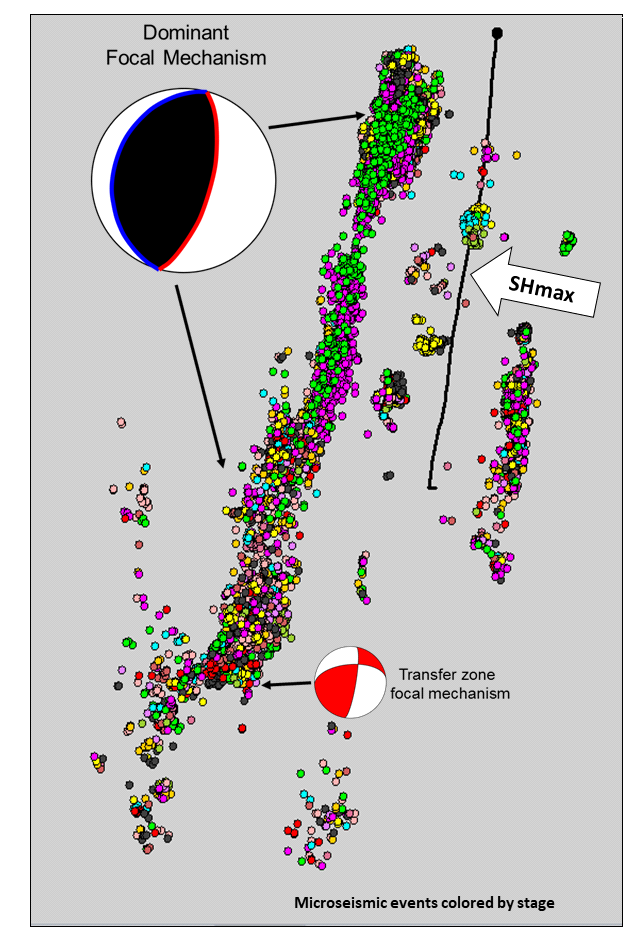
An anonymized Vaca Muerta project illustrates why basin-specific measurements matter. The initial well and completion design assumed a normal-faulting stress regime and a fracture response similar to familiar Texas shale developments. Microseismic monitoring did not show a simple set of textbook hydraulic fractures. Much of the observed stimulation response was associated with reactivation of large-scale faults.
Focal Mechanisms Identified How the Rock Was Failing
Automatic moment tensor inversion (AutoMTI) used waveform fitting to calculate a full moment tensor and a discrete focal mechanism for each event. Time-space pattern recognition fitted 3D lineaments to the event locations, helping identify fracture and fault orientations and evaluate the active nodal plane. In this example, the dominant population showed dip-slip behavior, while a transfer zone contained a strike-slip component.
The Microseismic Stress Model Differed from the Sonic-Log Model
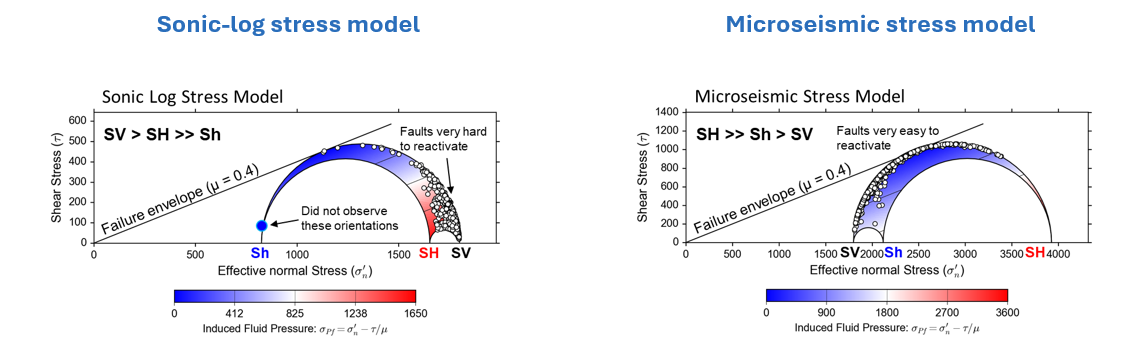
Microseismic focal mechanisms are sensitive to in-situ stress. In this example, the event-derived interpretation supported a highly compressive stress regime in which SHmax was the maximum principal stress. Under the sonic-log stress model, the observed fault orientations appeared difficult to reactivate. Under the microseismic stress model, the same structures plotted closer to failure and were more susceptible to reactivation.
Why Vaca Muerta Requires Local Measurement
Vaca Muerta is not mechanically uniform. Clinoform architecture, facies changes, and mechanical stratigraphy can vary laterally and vertically across a development. Multiple landing intervals, overpressure, mineralogical variation, ash-rich layers, fibrous calcite, natural fractures, and local changes in stress regime can alter how the rock responds to stimulation.
These features are not a basis for assuming one fracture outcome across the basin. They are a reason to measure the response at the well, pad, and block scale:
- Does propagation follow the local SHmax direction, conductive natural fractures, or both?
- Are the activated structures high-angle faults, strike-slip fractures, bedding-parallel features, or a combination?
- How much of the observed deformation remains in the intended interval, and how much is likely to contain proppant?
- Are depletion, parent wells, or offset pressure fields changing the direction or extent of the response?
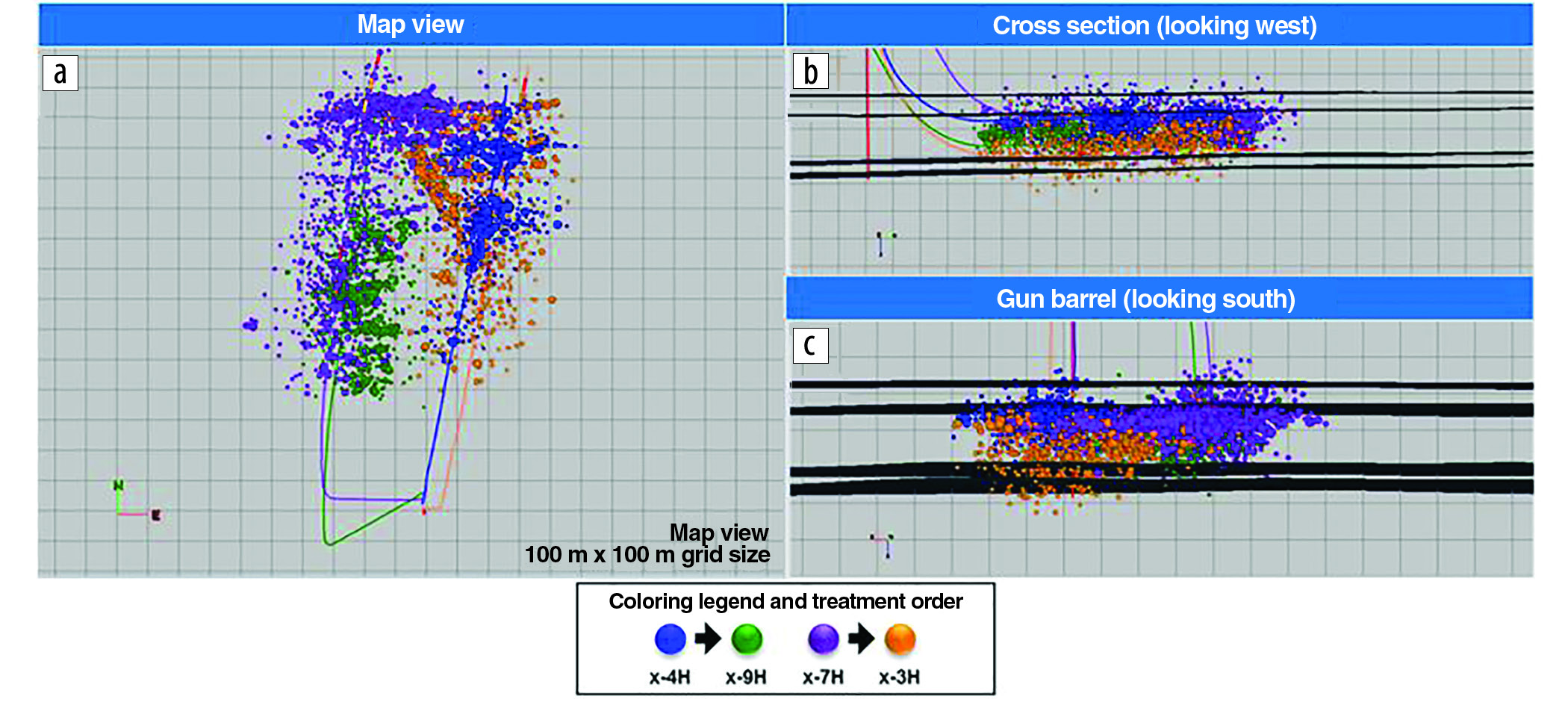
Source: Curia et al., The Leading Edge, 2018
Request a Vaca Muerta Technical Consultation
Tell us about your development and your upcoming completion decisions. We’ll follow up to discuss monitoring options for your project.