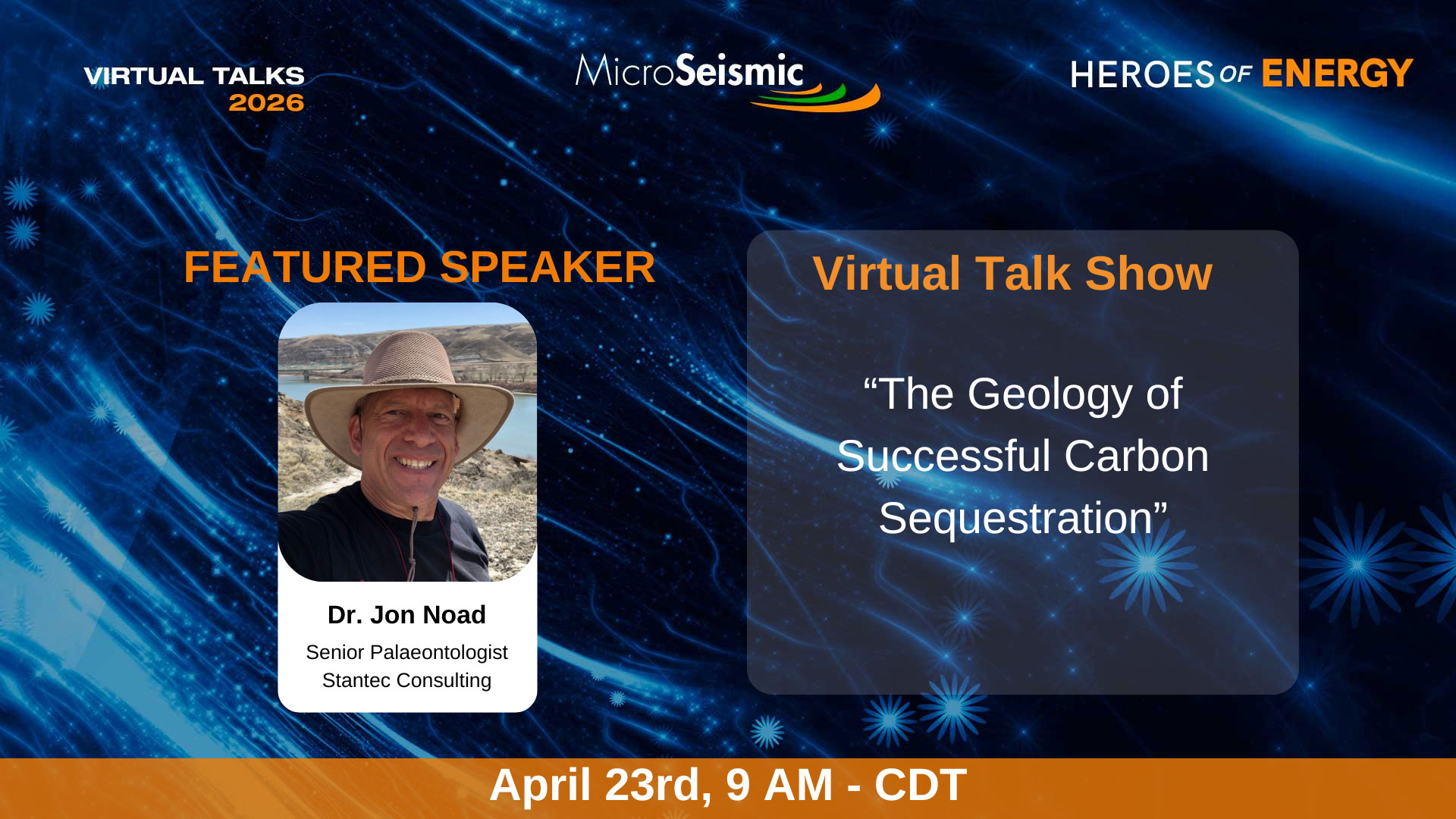
The Geology of Successful Carbon Sequestration
Advancements in seismic acquisition technology are delivering higher-resolution data while minimizing environmental footprint.



Seismic reflection amplitudes from a reservoir can be degraded by interbed multiples generated by high-velocity carbonate layers in the overburden. These multiples can “rain” onto the reservoir interval, contaminating the seismic signal.
This contamination can:
The effect is particularly strong in:
This talk presents:
We also discuss:
Dr. Ali Tura is Professor of Petroleum Engineering at the Colorado School of Mines (CSM) with over 30 years of industry experience prior to academia. Dr. Tura was Geophysical Senior Fellow at ConocoPhillips, Geophysical Advisor at Chevron, and Subject Matter Expert at Shell. He was also advisor on the Global Exploration Review Teams of international oil and gas projects for ConocoPhillips and Chevron.
Dr. Tura is currently Chief Scientist at Tulip Geosciences providing training and consulting on global project reviews and geophysical technology implementation with several energy companies. He is also co-director of the industry consortium Reservoir Characterization Project (RCP) at CSM which is entering its 42nd year with around 20 industry energy company sponsors.
Dr. Tura’s expertise is in oil and gas, carbon sequestration, and geothermal. In particular, reservoir characterization and monitoring, rock physics and AVO, multi-component and time-lapse seismic, borehole geophysics and fiber optics, machine learning, compressive sensing acquisition and processing, full waveform inversion and quantum computing.
Dr. Tura has been awarded Society of Exploration Geophysicists (SEG) Life Member in 2024. He was SEG Distinguished Lecturer in 2021 and received the Best Paper Award at SEGIMAGE conference in 2021 (out of over 700 industry/vendor/academia papers). He serves on multiple SEG, EAGE, and SPE technical committees and is actively involved in organizing various international conferences.

Advancements in seismic acquisition technology are delivering higher-resolution data while minimizing environmental footprint.
Copyright 2026 Microseismic Inc.